How to Signal for Help in the Wilderness (Get Big, Not Loud)
If someone knows your route and expects you back, staying put and making yourself visible is almost always right. Wandering is what turns a short search into a long one.
Being found is a separate skill from surviving, and it is the one people prepare for least. Most of what follows costs nothing and weighs nothing — it is knowledge and a whistle, not equipment.
Stay put, and why
The single most useful thing you can do is stop moving, provided someone knows roughly where you went and when you were due back.
A search starts from your last known position and works outward. Every hour you spend walking makes that area larger, and a searcher who has already covered the ground you are now standing on will not come back to it. Groups that stay put are found far more easily than groups that keep moving toward what they believe is the way out.
The exceptions are narrow: move if where you are is genuinely dangerous, if you need shelter and there is none, or if nobody knows you are missing and you must reach somewhere you can be seen. If you do move, leave a marker showing the direction and the time.
Three of everything
Three whistle blasts, three flashes, three fires in a triangle. Three is the international distress convention, and it separates you from every natural sound and light.
Space them out. Signal on a schedule rather than constantly — you will exhaust yourself and your batteries otherwise, and searchers are not listening every second either.
What actually reflects
A real mirror, a phone screen, polished metal or a foil panel. A stone, however smooth, will not — that piece of advice circulates widely and does not work.
To aim a mirror: hold two fingers in a V at arm’s length, put the aircraft or vehicle in the V, and flash the reflected light across your fingers and onto the target.
A whistle beats your voice
It carries further, costs almost no breath, and works when you are too cold or too tired to shout. It weighs nothing. Put one on your pack strap where you can reach it without taking the pack off.
Get big and geometric
From the air, a person is almost invisible. What reads is scale and shape.
- Spread bright kit out — a tent, a jacket, a bivvy bag.
- Make straight lines, triangles or a large X. Nature makes very few straight lines.
- Contrast matters more than colour: dark kit on snow, bright kit on dark ground.
- Trample shapes into snow or grass; shadow makes them visible.
Fire and smoke
Fire is visible at night; smoke is visible by day. Green vegetation or damp material makes thick white smoke; rubber or oil makes black. Keep the material to hand and add it when you actually hear or see something, rather than burning your supply on an empty sky.
Ground-to-air signs
If you can hear or see aircraft searching, there is a small set of ground signals worth knowing. Make them large — several metres per stroke — with high contrast, using kit, trampled snow, rocks or branches:
- V — I need assistance.
- X — I need medical assistance.
- An arrow — I am travelling in this direction.
Keep them in open ground rather than under tree cover, and lie beside them where you can be seen rather than inside a shelter.
Want the rest of the skills, not just this one?
Stranded on a coast or island
Everything above still applies — three of everything, a real reflective surface, getting big and geometric, ground-to-air signs — but a coast or small island changes a few specifics:
- You likely don’t have a pack or tent to spread out. Use whatever bright material you have — clothing, a tarp, a sail if you came off a boat — laid flat on open sand or rock rather than draped somewhere it can’t be seen from above.
- Driftwood burns readily once dry, and it’s usually not in short supply on a shoreline. Green vegetation or damp seaweed thrown on a fire produces heavy white smoke by day, the same principle as inland — keep it ready to add quickly rather than trying to gather it after you’ve spotted a boat or aircraft.
- Sand and rocks work as well as snow or trampled grass for a large V, X, or arrow — the ground-to-air signs above apply exactly the same way.
- Stay near the highest safe, open point you can reach, since both boats and aircraft need a clear line of sight, and a fire or signal low in a cove or behind rocks can be invisible from either direction.
- If you came off a boat, check for a VHF radio, flares, or an EPIRB before relying on improvised signals — a distress call on marine channel 16 or a flare reaches much further and faster than a fire or a mirror. Save handheld flares for when a vessel or aircraft is actually visible rather than firing them at an empty horizon; they burn for a short, fixed time and you may only get one useful chance.
- Never drink seawater. It’s the single most dangerous mistake specific to this situation — it speeds up dehydration rather than solving it. Collect rain or dew if there’s no other fresh water source, and limit exertion in heat to reduce how much water you need in the first place.
Once you have been spotted
Movement is what confirms you are alive and needs help. Keep signalling until the aircraft or party clearly acknowledges you — a wing dip, a circle, a returned flash — rather than stopping at the first sight of them.
Then stay where you are. Moving after you have been located is one of the more frustrating ways a rescue goes wrong, because the search restarts from a position you have already left.
If a helicopter is coming in, secure anything loose. Rotor downwash will lift a foil blanket, a tarp or a loose jacket straight into the aircraft.
Sound carries differently than you think
Sound travels better across water, along valleys and at night when the air is still, and badly into wind or over a ridge. If a first round of whistle blasts gets no response, try again from higher ground or from a spot with a clear line down a valley before you conclude nobody is there.
Listen properly between rounds. Blow three blasts, then stay completely silent for a full minute. People signalling continuously never hear the reply.
Signalling at night
Light carries much further in the dark than anything does in daylight, and it costs very little.
A head torch flashed in threes is visible a long way in open country. The strobe setting most torches have is worth knowing about before you need it. A fire is visible further still, but only if it is somewhere with a clear line of sight — a fire in a hollow is a fire nobody sees.
Sleep in shifts if there are enough of you, so someone is always awake to respond to a sound or a light. And keep one light in reserve. Running every torch flat during the first night leaves you with nothing for the second.

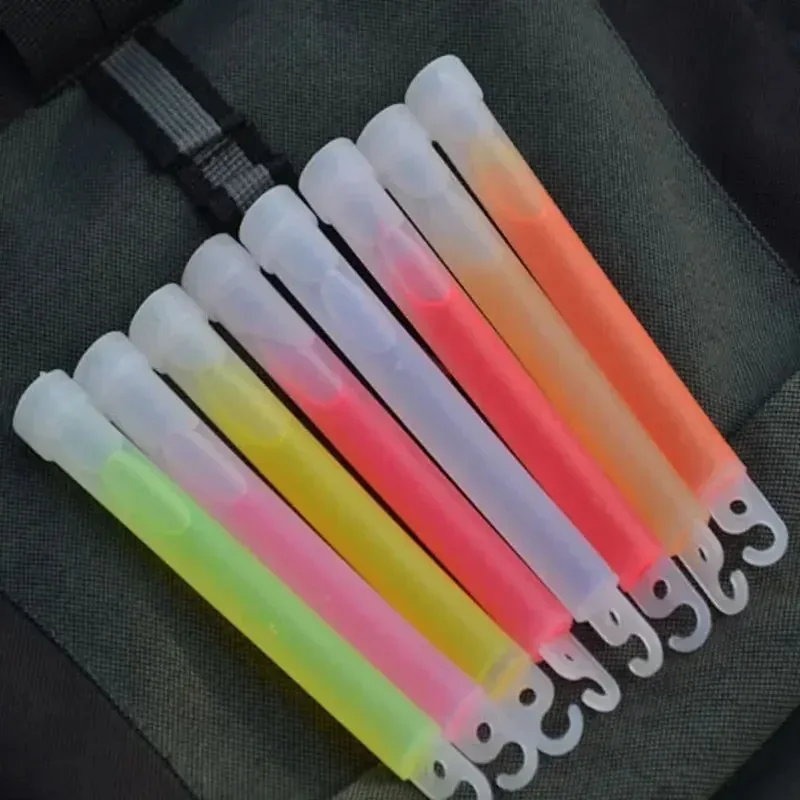
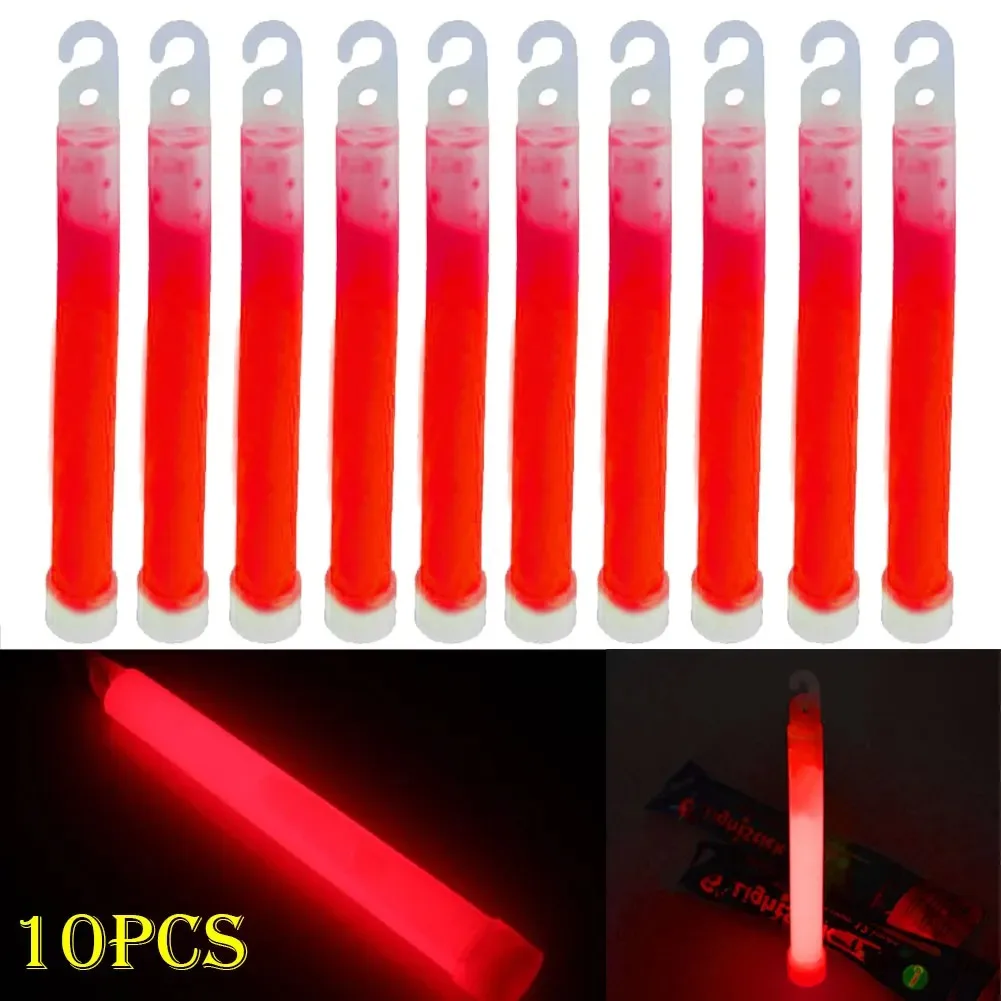
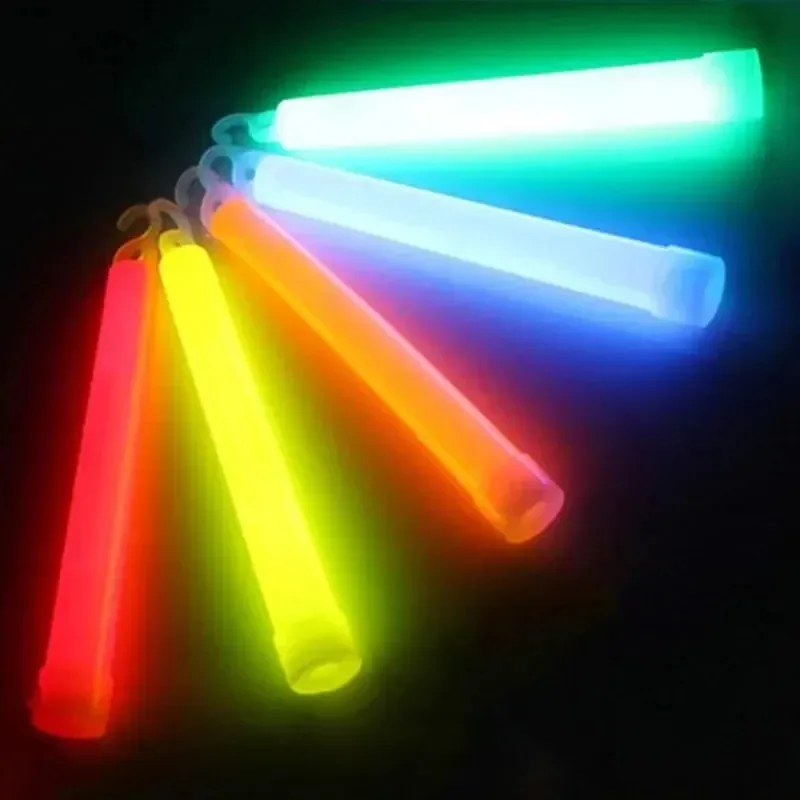
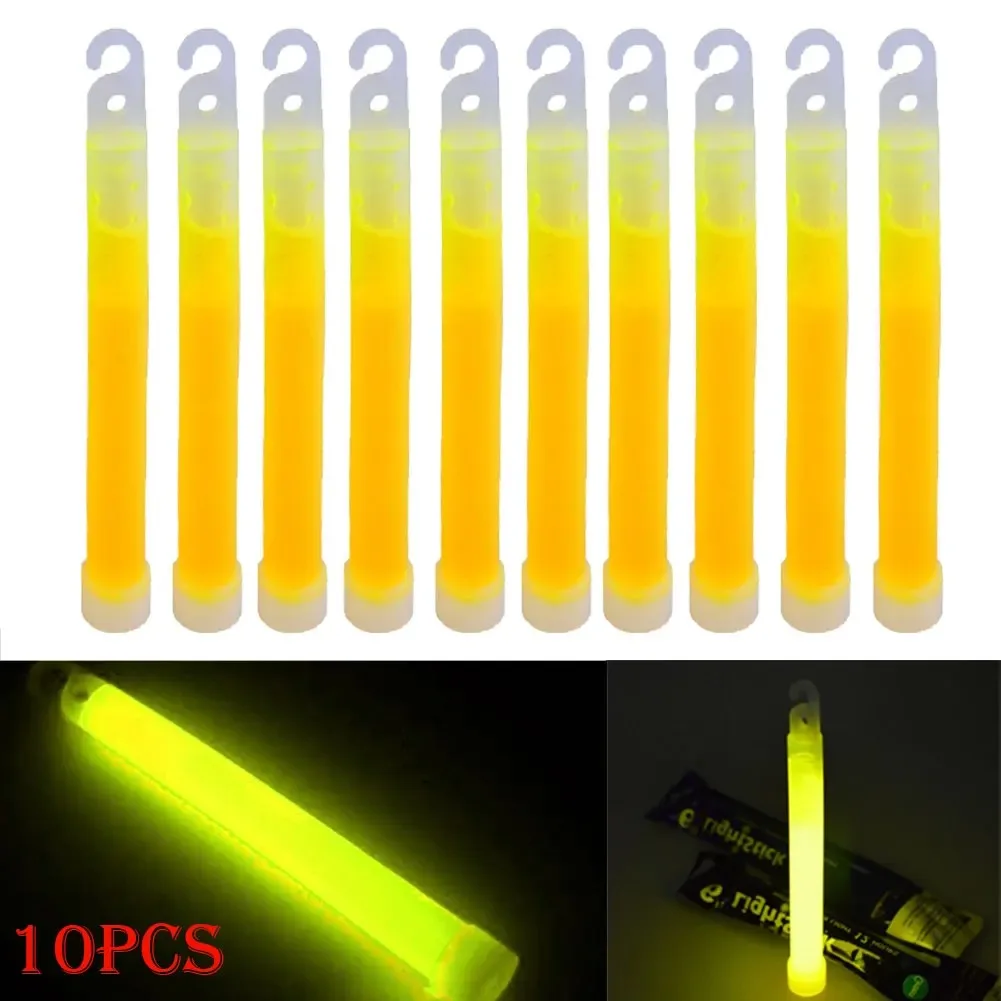
A chemical glow stick is a useful passive addition to a night signal, though it’s worth being precise about what it does and doesn’t replace. It isn’t a substitute for the three-flash convention above — it just glows steadily rather than flashing — but it needs no batteries, runs for hours once cracked, and a hook on the end means it can hang from a pack, a tent guyline, or a branch to mark your position continuously while you sleep or rest. Several of them laid out on the ground can also trace a large V, X, or arrow at night the same way trampled snow or spread-out kit does by day.
The kind pictured above (a 10-pack with a hook on each stick) is glow chemistry activated by shaking, described by the manufacturer as thicker and longer-lasting than standard-grade sticks — that’s their own claim, not something tested by this site. If one does break, the chemical inside washes off skin or clothing with ordinary soap.
Prepare the signal before you need it
Whatever you plan to use, get it ready while you have daylight and energy. Gather green vegetation for smoke and keep it dry. Lay out the ground shapes. Put the whistle around your neck rather than in the pack. Decide where you would stand to catch the sun with a mirror.
Doing this early matters because the moment you actually hear an aircraft, you have perhaps a minute — and that is not enough time to start collecting damp branches.
The phone
Even without signal, most phones have an emergency SOS function that can reach services. Keep the phone warm — cold flattens batteries fast — and put it in aeroplane mode between attempts so it stops burning power hunting for a network.
Learn where your phone’s SOS is before you need it.
Quick answers
How do you signal for help in the wilderness? Three of anything — three whistle blasts, three flashes, three fires — is the recognised distress signal, and staying put where you can be seen usually beats moving to look for help.
Does my phone work for signalling if I have no signal? Often yes — most phones have an emergency SOS function that can reach services even without normal signal. Keep it warm and in aeroplane mode between attempts to save battery.
What is the best way to signal an aircraft? A mirror or any reflective surface aimed at the aircraft carries an extraordinary distance and costs nothing to carry.
Should I stay in one place or keep moving if I need help? Stay put if anyone knows your route — a stationary, visible position is far easier to find than someone who kept moving and is now somewhere unexpected.
How is signaling for help different on a deserted island or coast? The core techniques are the same — three of everything, a real reflective surface, getting big and geometric — but you likely have no pack to spread out, so bright clothing or a tarp laid flat on open sand works instead. Check for a VHF radio, flares, or an EPIRB if you came off a boat, since those reach further than any improvised signal, and never drink seawater.
Learn it properly, before you need it
Survival Cards turns this and 88 other skills into a deck you can play round a fire — $19, print at home. See what's inside →
Related guides
What to Do If You Get Lost Hiking (The First Ten Minutes)
The first thing to do when you realise you are lost is stop walking — here is the sequence that follows, and how to decide between staying put and moving.
desert survival tipsDesert Survival Tips: Shade, Water, and Your Vehicle
How desert survival differs from everywhere else — why you travel at night, why you stay with the vehicle, and how fast dehydration takes your judgement.
cold weather survival basicsCold Weather Survival Basics (Sweat Is the Enemy, Not Cold)
Why managing sweat matters more than adding layers in the cold, the early warning signs of hypothermia, and what to do about them.
hiking outfit ideas by seasonHiking Outfit Ideas by Season
Hiking outfit ideas for spring, summer, fall, and winter, built from the same core layering pieces so you don't need a fully separate wardrobe for each season.